The Construction Zone of Our Soul
There was a specific hour in the late nineties when the house went quiet, usually after dinner dishes were cleared but before bedtime stories began. This was the sacred window for the digital construction site. We would sit cross-legged on the carpet, knees knocking together, waiting for the dial-up modem to scream its familiar handshake symphony. The screen would flicker from black to a soothing, albeit slow-loading, beige background. And there it was: the “Under Construction” page.
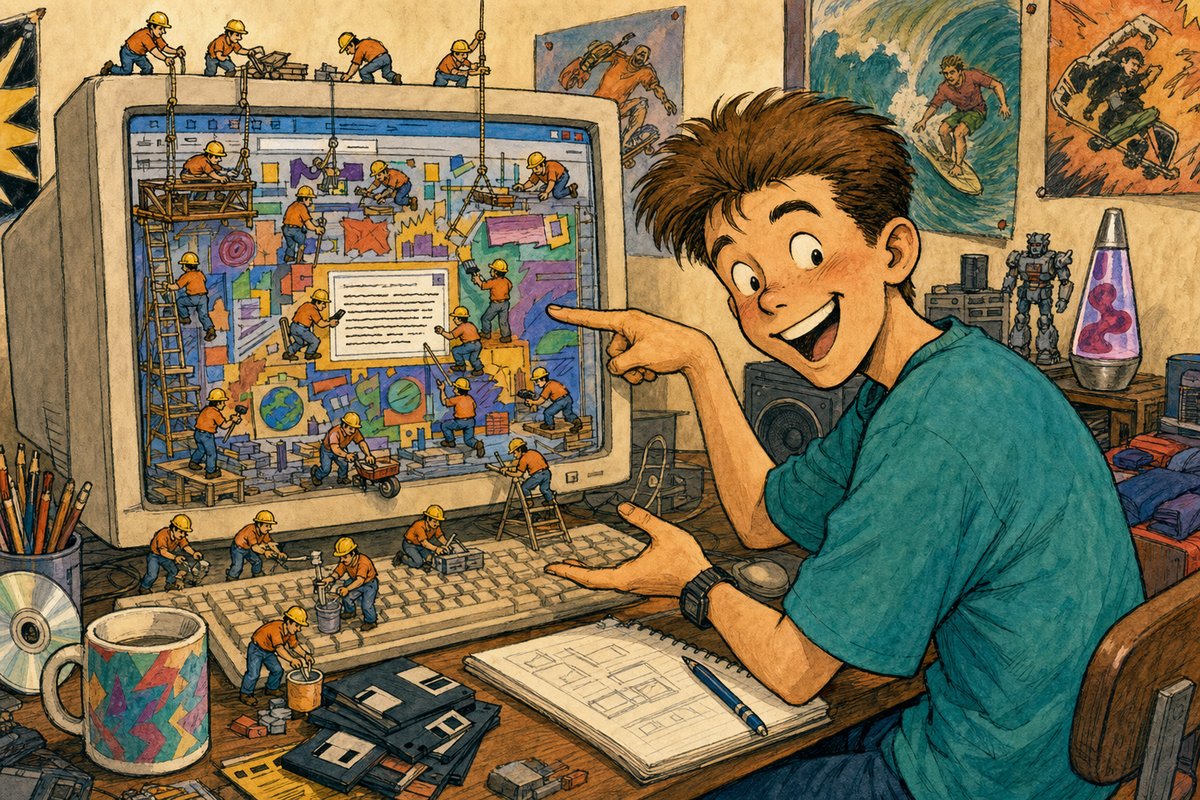
One-panel evidence: the website had one paragraph, seven animated workers, and a promise to return soon.
It wasn’t just a placeholder; it was a promise. A vow that our corner of the internet was a bustling work zone, even if the only laborers were pixelated men in hard hats swinging sledgehammers at empty air. We treated these pages with more reverence than actual libraries. If someone visited your site and saw the animated workers, they knew you were busy building something important. Something vital. Like a fan page for a boy band or a directory of links to other people’s pages.
The ritual was precise and required absolute focus:
- Wait for the screeching modem to connect, ignoring the static on the TV in the next room.
- Navigate through three layers of nested folders until you reached
index.html. - Watch the animated GIFs load pixel by pixel, pretending not to notice how long it took.
- Feel a surge of pride knowing your page had more energy than most living rooms.
Here is what we thought: The animated workers were actually building our digital legacy in real-time. We believed that as long as the little guy with the shovel kept digging, our website was alive, growing, and evolving. If he stopped moving, our site would freeze into oblivion. We didn’t know about caching or static files; we only knew that if we refreshed the page too fast, the workers might get dizzy and fall off the screen. It was a fragile ecosystem of hope and bandwidth.
The charm lay in the simplicity. We weren’t tech wizards coding complex databases; we were digital carpenters nailing together bits of HTML with the equivalent of a hammer and a prayer. The page didn’t need to be fast because speed wasn’t the point; presence was. You wanted visitors to feel like they had walked onto an active job site, not an abandoned lot.
  [O]
 /||\
  | |
 /   \
[===] <--- The shovel hits the void
We imagined these pages were bustling hubs of activity. In reality, we were hand-authoring static documents and commonly used animated GIFs to signal unfinished sections. That’s it. No backend servers pinging databases, no real-time updates. Just a looped animation on an image file that said, “I am here, but I am not done.” It was the digital equivalent of leaving a note on your fridge saying “Gone to milk the cow,” even if you didn’t own a cow.
The beauty of it was in the patience. You learned to wait for things. You learned that good sites, like good bread, take time to rise. And when the workers finally stopped swinging their hammers because the page had fully loaded, you felt a strange sense of accomplishment. Your construction site was complete. For now. Until next week, when you’d add one more link and reset the clock.
We built castles out of GIFs and called it progress.